Turning an idea into a business
It started with an observation I had while building a portfolio and applying to jobs during my senior year of college: building a portfolio sucks. Friends echoed my sentiment, so I figured I'd try and validate that this is a problem hundreds of people experience.
I spun up a landing page, posted it in a few product design communities, and within 48 hours had 200 waitlist sign ups and 1 request to pre-order their first month of payment. That was enough validation for me to build an MVP.
Getting my first paying customers
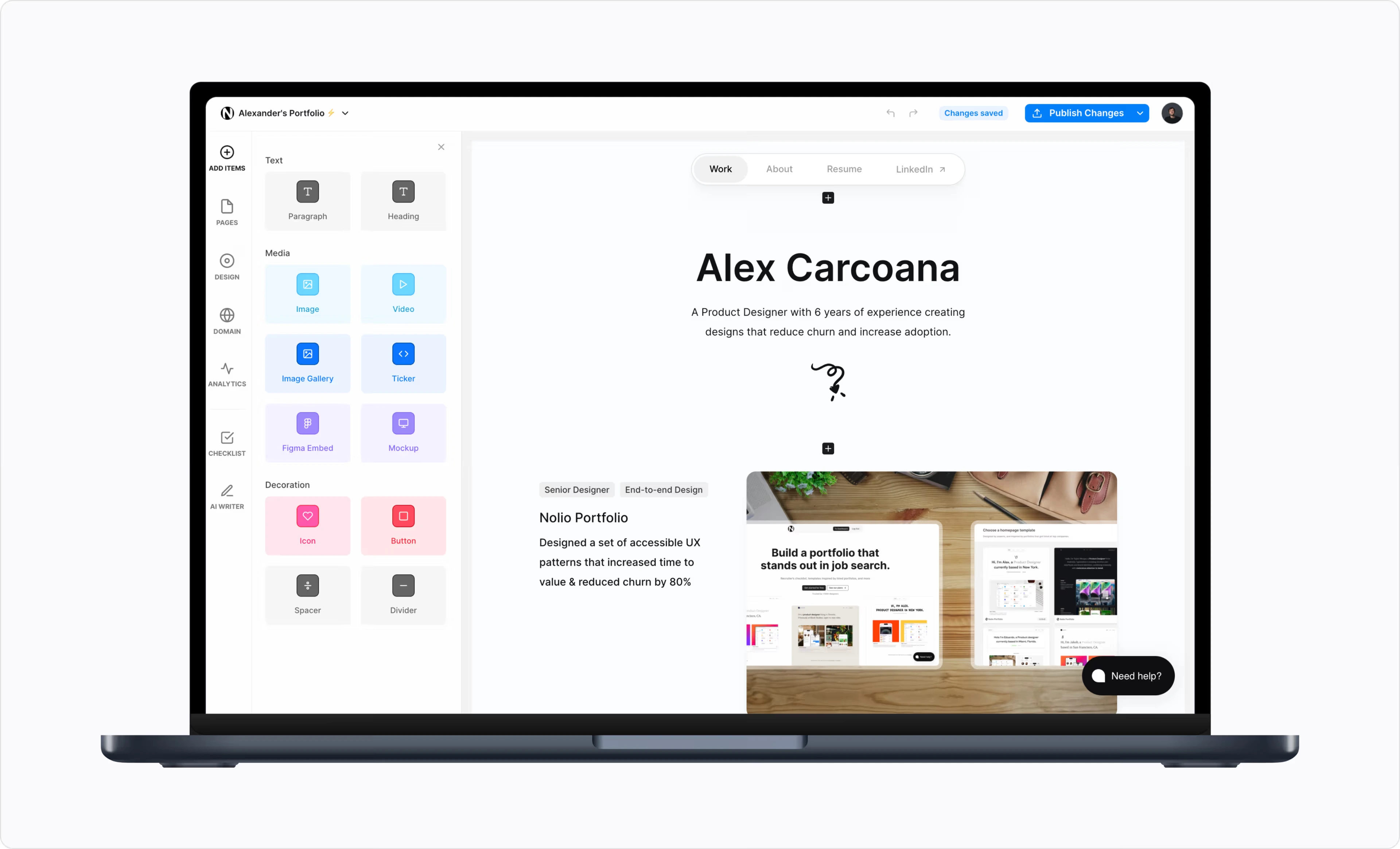
Building the website builder was hard. LLMs were not popular at the time, and I spent hours reading documentation and figuring out the best way to architect a site builder interface.
I also had to consider how to make the freemium experience work, like where to put the pay walls.
I built the MVP in a 3 months (while being a full time student).
Reducing churn
When the first monthly subscription came through, I was ecstatic. Along with releasing to our waitlist, I had worked with a friend and we did a lot of cold outreach on LinkedIn.
The first major challenge came when I started getting customers, but churn was at 50%. For every two customers who signed up, one would leave within their first billing cycle.
After customer interviews, and iterating on prototypes, I found out the core problem was time to value. I needed to get them to "Aha" moments faster. So I did that and churn dropped to 5%.
Growth through partnerships
To scale, I pursued partnerships with UX bootcamps (later I realized this was a huge mistake). The logic seemed sound: bootcamp graduates needed portfolios, and we could make it easy for them. My customer count grew to over 200 paying customers.
When I realized I messed up
I spent 2 years dedicated to this business. 80+ hours back to back to back. Barely any time off. Barely any time with friends. I was so lonely as a solo founder. I felt even when I described the challenges, people didn't feel the gravity like I did.
What kept me going was my belief that the world needs more authenticity and that I felt I was moving us towards that in some small way through a bespoke site builder where people could build a personal site that expressed who they were.
Eventually I realized it was doing the opposite.
My tool was charging people who didn't have a job in order to host a portfolio site that looked identical to all the other students from the same botocamp. Sure I had a few hundred paying customers, but this was not what I envisioned.
Shutting it down
My ethical concerns aligned with what the business metrics and directional forecast showed. The serviceable market was limited. The business could generate five figures annually, but it couldn't scale beyond that in a meaningful way. Even if in some way it could, I didn't want to.
I considered selling the company, I even recieved a $120k offer for it. But with limited growth potential and the ethical concerns weighing on me, I couldn't in good conscience hand off something I no longer believed in.
I shut it down.
What came next
Shutting down Nolio was painful, but it freed me to find what came next. I landed a role at Antithesis, a startup founded by the engineers who built FoundationDB (which Apple acquired and now powers iCloud). I'm working on a product I believe in, with a team that challenges me, and I'm learning what it means to build something people want.
Read next